Showing posts with label Mass extinction. Show all posts

Sunday, May 16, 2010

Accretionary Wedge #25: Geo-Image

The current edition of the "Accretionary Wedge" is hosted by Highly Allochthonous. The motif this month is to gather geology-related images. Outcrops, sections, satellite images, minerals, fossils, seismic images, diagramms etc.

Here is mine: The Permian-Triassic transition epxosed at the Northface of the "Aferer Geisler" (Dolomites, Northern Italy).
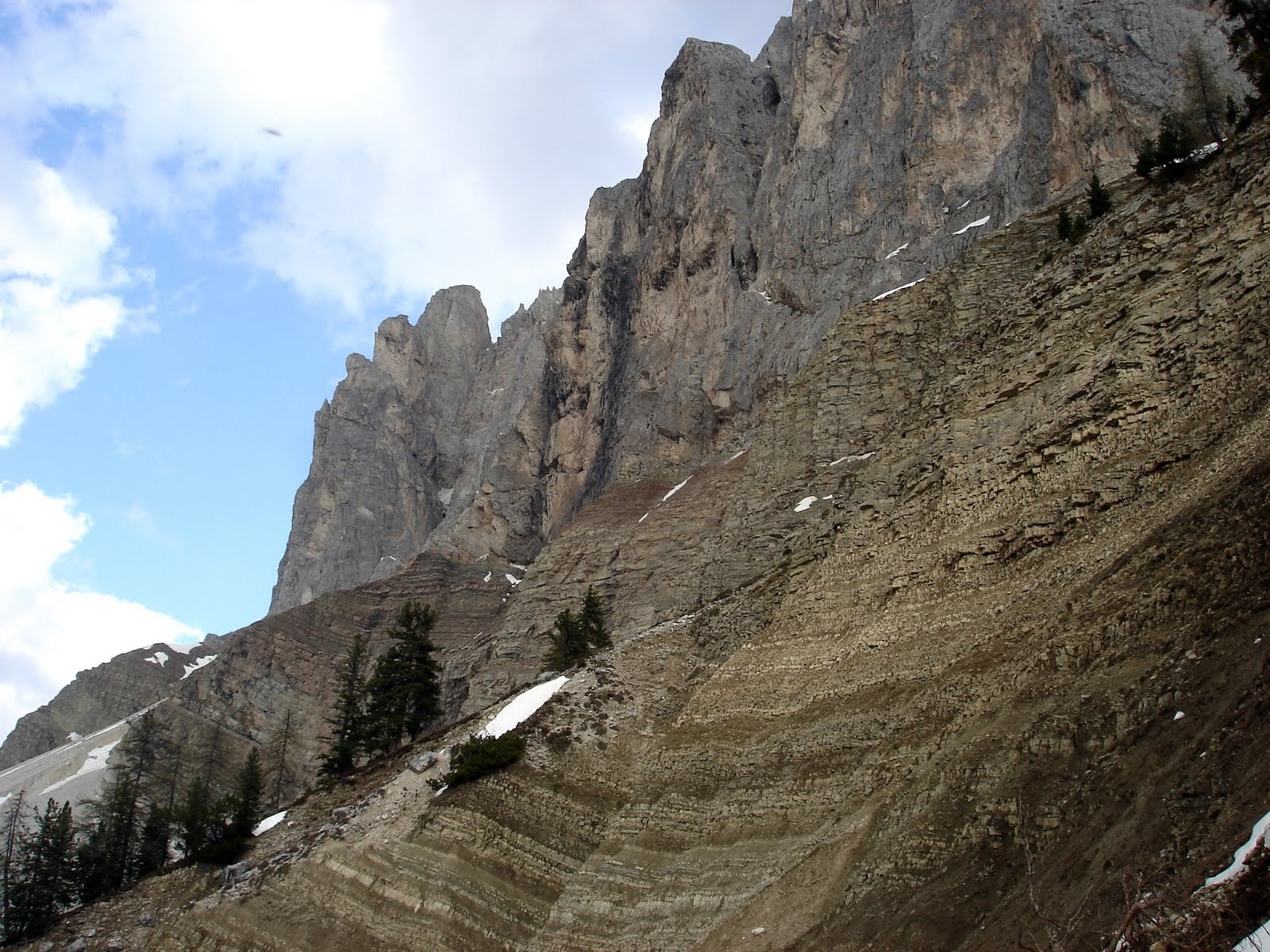

The Bellerophon Formation (the brown/yellow succession in the lower part) represents late Permian (Changhsingian) shallow marine to marginal marine environments that yield insight into the pre-extinction world. The end-Permian mass extinction is suggested to have wiped out about 95% of all marine species, and thus is considered as the most severe biotic crisis that metazoan life encountered on our planet. The Werfen Formation (the grey to reddish slope in the middle part of the picture) extends from the latest Permian (latest Changhsingian) to the lower Triassic (Induan/Olenkian) and is one of the best studied succession of the end-Permian mass extinction and its aftermath. In this picture, the extinction level is exposed approximately where the trees end. The steep cliffs forming the top of this range are composed of reef carbonates for which the Dolomites are so noted.

The Dolomite region has been selected as a Unesco World Heritage site. Besides the breath-taking beauty of this landscape, the significance of this region for earth sciences has also been taken into account.

Friday, November 7, 2008

I highly DO NOT recommend...

...the following book:

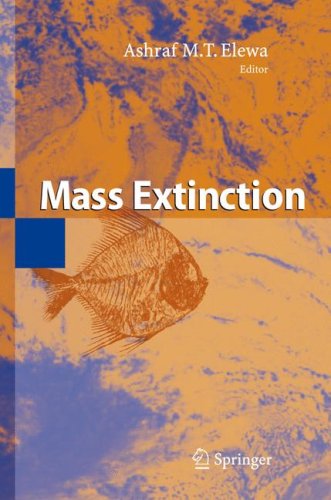
Elewa, Ashraf M. T. (ed.), 2008: Mass extinction. Springer

I like mass extinction events. Accordingly, this book catched my eye as I browsed through the shelves of our library. Back home, I started flipping some pages and reading here and there - awfull. Except for the guest authors articles, which are well done, this "book" appears to be cheap joke.
All of the editors articles (9 of 15) are short, badly written and not sufficiantly referenced. For example, the author refers constantly to wikipedia articles or cites for every occasion standard palaeo textbooks that are suited for undergraduate education. The chapters are filled with fuzzy standard statements and do not really help the reader to get into the topic. In fact, most wikipedia articles provide a more profound picture on certain aspects. For instance the chapter about the Permo-Triassic extinction event beggars all description. It barely covers 1.5 pages and provides very blurry general information without presenting any evidence or serious references. A fourth of the article is wasted for comparision of the PT-event with Agatha Christie's "Murder on the orient express".

Just one example from page 129:"One of the mysteries of the history of the Earth is the layer of clay that was deposited around the entire globe approximately 65.5 million years ago. It is also known as the K-T extinction event [...]."

Don't get me wrong - I really don't want to tease the editor, but this is just a very bad book that costs the unhappy purchaser 135 € (170 $). I am still wondering how this book came through the review at Springer. Perhaps they hoped to make some money because most library order books unseen.

Long story short: Please do not buy this book!